Three-stage pretreatment lines have a reputation for simplicity, but that simplicity comes with a trade-off in performance and flexibility.
For those running traditional iron phosphate lines, those limits often look like…dirty, ugly sludge building up in your tanks and risers. Steel-only substrate limitations that keep you from taking on new work. Corrosion performance that never quite exceeds good enough.
(And we’d bet that when corrosion results do come back short, it traces right back to the chemistry struggling to keep up with real-world soil loads. Dirty parts, dirty process, dirty results. 🫣)
Most shops accept these headaches as the cost of running a 3-stage process. But they’re not a 3-stage problem. They’re an old chemistry problem.
That’s exactly why we developed Steelcote™ 1750.
Bringing Zirconium to 3-Stage Lines
Steelcote™ 1750 is a zirconium-based pretreatment system designed for simple 3-stage lines that need high-performance results without the high-maintenance hassle:
1. Steelcote™ 1750 (Cleans and coats in a single step.)
2. RO/DI Rinse
3. RO/DI Rinse
.png?upscale=true&width=1120&upscale=true&name=%23Trade%20Show%20(10).png)
The outcome is sludge-free zirconium pretreatment that handles real soil loads while opening the door to multi-metal work.
That matters because a lot of competitive cleaner-coaters look great in a clean lab setting, but fall apart the moment they have to deal with the kind of contamination that actually shows up on a working production line. SC-1750 was formulated to carry soil load in a recirculating bath.
What Changes on the Line
So what actually happens when you swap out that archaic, sludgy iron phosphate for SC-1750? Quite a bit:
1. Stronger Corrosion Performance
SC-1750 lays down a non-porous nanoceramic conversion coating that has delivered stronger corrosion performance than traditional iron phosphate in accelerated testing. If your current panels are coming back borderline, this is one of the first places you’ll see the difference.
2. Multi-Metal Flexibility
Iron phosphate is far less flexible across mixed substrates. That limitation becomes obvious fast when a job includes aluminum or a mixed-metal assembly. SC-1750 handles steel, aluminum, and mixed-metal applications, giving you more flexibility when job requirements change.
3. No Phosphate Sludge
This is one of the biggest operational shifts. Zirconium chemistry doesn’t generate phosphate sludge. That ugly buildup in your tanks and risers? Gone. This means fewer cleanouts, less waste handling, and less frequent dumping of a dirty, overloaded bath.
4. No Sealer Stage Needed
Because SC-1750 deposits a nanoceramic layer, there’s no sealer stage required. Fewer stages mean fewer variables and fewer opportunities for the process to drift.
5. Simpler Bath Control
SC-1750 is managed with simple pH monitoring and titration. No complex additive schedules. No mysterious control parameters. Operators can maintain the bath consistently without constant troubleshooting.
See It for Yourself
In side-by-side CPI panel testing, SC-1750 has outperformed typical iron phosphate products by a wide margin. The difference was clear enough that it showed up immediately in the panels.
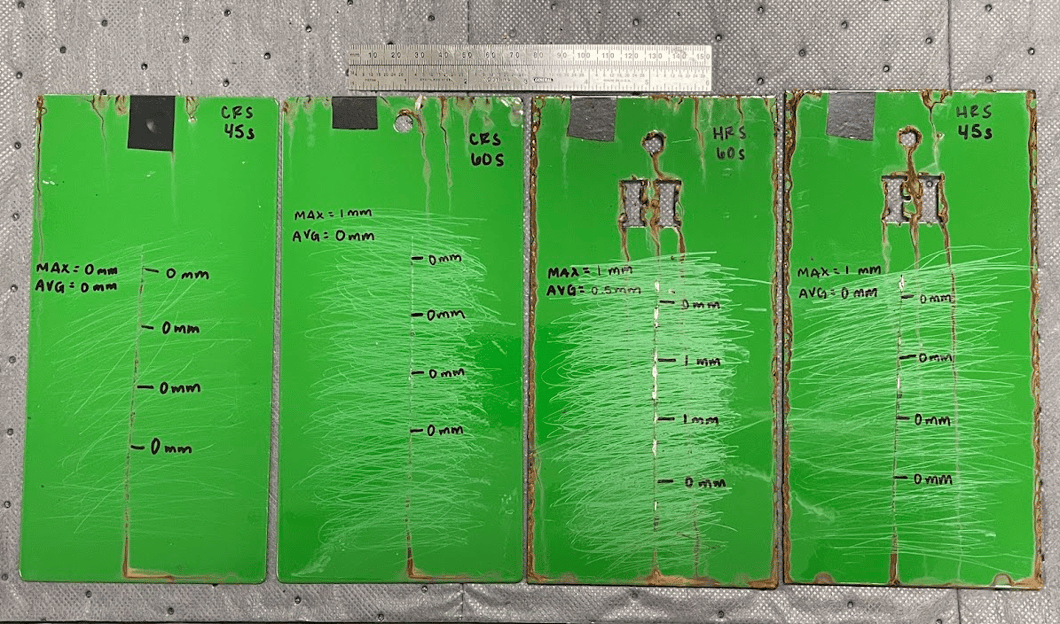
The image above shows SC-1750 panels after 500 hours of neutral salt spray testing. Every panel showed minimal or no rust spread from the scratch. The paint stayed fully intact with no bubbling or peeling across all four panels.
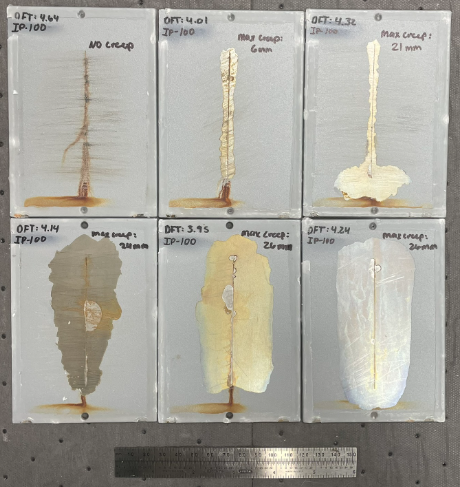
These panels show a typical iron phosphate product after 500 hours of neutral salt spray testing. Five out of six panels failed with rust spreading up to 26mm from the scratch and paint peeling off, demonstrating poor salt spray results.
If any of this sounds like it fits your situation, it’s worth a closer look.
Request the SC-1750 Spec Sheet to see what sets it apart.
And if you want to go a step further, send us your parts. The Solution Squad will test them in our lab and send back real performance results on your actual substrates. Get in touch.